
Introduction
Here in Overbury, we farm in a landscape shaped by the catchment of the River Severn and River Avon. As we stretch down into the Vale below Bredon Hill, this area is a natural flood plain, which requires careful water management.
Alongside this, the Hill also has many natural springs from which we are able to provide minimally treated water to the whole of Overbury and Conderton.
With the increasing effects of climate change, it is a balancing act to sustain water supply while mitigating flooding between heavy and prolonged periods of rainfall, and recently hot, dry summers.
Background:
Excavations from around the hill have shown signs of human settlements dating as far back as the Iron Age.
These first inhabitants would have based their life around the Bredon Hill springs, and additional sources around Conderton Camp. Overtime the village of Overbury became dominated by watermills, which fed into flour and papermaking, and the thriving silk industry.
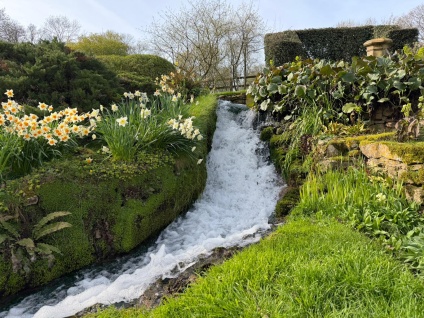
Though the mills are no longer there, a network of streams can still be seen across the village.
Water Management

This photo shows Long Meadow flooding. This season alone, we have experienced multiple high water events, with February having 88% higher rainfall than average – this just demonstrates how unpredictable our weather is becoming. Therefore, good management and building resilience is essential. So what does this look like in practice?
On our farms, this means:
- Capturing and storing water in wet periods, for use in drier months
- Improving soil health so it absorbs and holds more water
- Maintaining ditches, drains and watercourses responsibly
- Using cover crops and grass margins to reduce runoff
Healthy soils act like a sponge — slowing the flow of water during storms and holding moisture when it’s dry.
Managing these natural resources responsibly, helps us ensure the long-term sustainability of the landscape so we can continue to grow food, and provide habitat for wildlife.

Spring Water Supply
Overbury and Conderton receive a continuous water supply from a number of springs high up on the hill. However, this supply relies on seasonal rainfall to replenish the aquifers that run deep underground. The supply of water then gets processed, and pumped to all the properties, before being recycled.
Water Treatment
Have you ever thought about the process water has to go through to be made safe for consumption?
In Overbury and Conderton, our water gets processed at an on-site treatment plant, through a combination of reverse osmosis and UV. The treated water then gets pumped out to all the properties.
It is also worth noting that the entire treatment process consumes a significant amount of electricity.

Water Study
We are very fortunate in that our springs seem to be resilient, having held up well during the prolonged dry periods. Yet, we have observed reduced water flow in our higher springs during the long, dry summers of the past few years.
We are therefore commencing a two-year study on our water flow, which will help us model the natural water available, and how it changes at different times of the year.
We have some fascinating data from when this was last carried out back in the 20th century, which will be interesting to compare to and see how the flow of water has changed over time.
Reducing Pressure on the System
As you can see, the whole water system is complex. However, it does not end there.
90% of our water is recycled back into the system. With water supplies becoming more unpredictable due to climate change, it is important to reduce our initial consumption, and thereby also reduce pressure on our vital wastewater infrastructure.
Some water-saving methods that we can all use include:
- Choosing showers over baths
- Closing taps while brushing teeth
- Running dishwashers only when full
- Using water from washing up in the garden
- Installing water butts to use for watering plants

Conclusion
Climate change will continue to test our systems. Yet as a community we can work together to use water wisely and protect our spring supply, while our farms can build resilience into the landscape we all depend on.
From the rivers to the springs, ditches, soils and floodplains shaping life around Bredon Hill – managing our water carefully will not only safeguard our farms and homes, but also support the wildlife, habitats and natural cycles that make this place so special.
.jpg)